Two million fake secrets, planted in AI prompts, came back used
Dragos planted about two million unique secrets in AI prompts over five months. Attackers stole them from at least three breached providers, resellers read them from marketplace logs, and privacy flags did not stop either.

On this page
In brief
- Dragos hid about two million unique secrets in AI prompts over five months, then watched who used them.
- Attackers stole prompt data from at least three AI hosting providers that did not know they were breached.
- Marketplace resellers read customer prompts with ordinary request logging. No exploit was needed.
- Prompts marked Zero Data Retention were still read and shared; one secret link turned up in a company chat 24 days later.
- OpenRouter emailed MiniMax users on Nov 21 that their prompts may have been read, and pulled the ZDR label from those endpoints.
HD Moore spent five months hiding fake secrets in AI prompts: about two million of them, each one unique, each one placed in a single prompt sent to a single provider. If a secret ever surfaced anywhere else, Moore would know exactly which prompt had leaked. The secrets started firing within days, and the ones planted in July are still firing now.
Moore, chief research officer at Dragos, published the results on November 19: at least three providers breached without knowing it, resellers reading prompts with ordinary logging, privacy settings ignored often enough that the promise looks decorative.
A secret that exists in one place
The method is the whole experiment. A canary token is a secret that exists in exactly one place. Dragos generated unique AWS keys tied to empty, fully logged accounts, passwords for test servers, unique web addresses, DNS names, and references to private git repositories. Each token went into exactly one prompt, sent to one provider, and the team controlled the infrastructure every token pointed to. Any login attempt, fetched link, or cloned repository was logged and tied back to the exact prompt, model, router, and privacy setting that carried it.
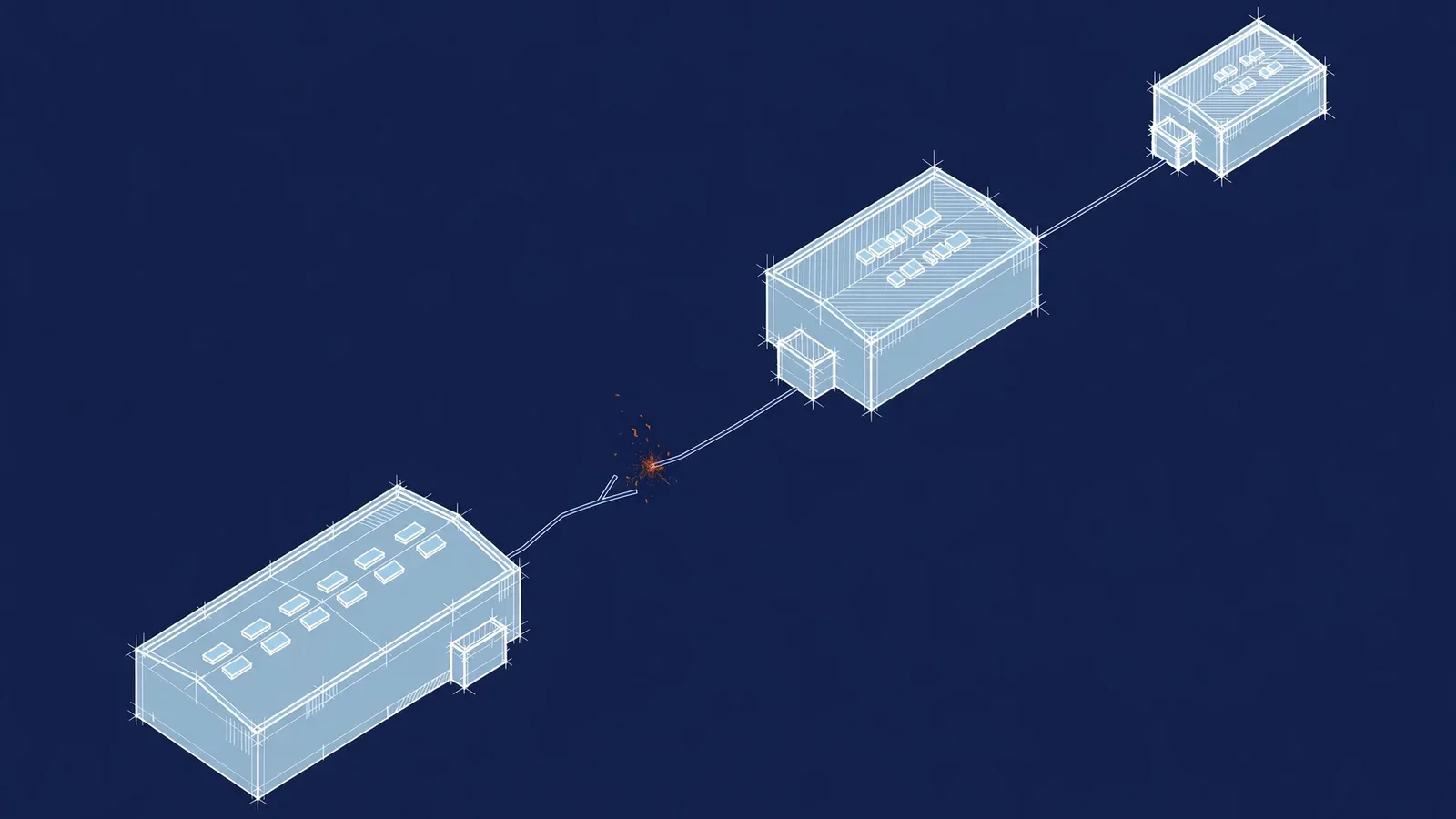
That tells Dragos a prompt leaked, but not where in the chain. So the team built what Moore calls a traceroute for AI inference: an image link in the prompt calls back to Dragos's servers, and every system that fetches it gives away an IP address, a client, and a timestamp. Dragos traced about 2,000 routes this way.
Three providers, breached and unaware
Attackers were stealing data from at least three AI hosting providers, and none of the three knew until Dragos told them. The earliest incident dates to mid-July, and one provider has still not disclosed its breach publicly.
The largest breach involved a couple hundred AWS keys. Each key went out in exactly one request to one provider, all inside a few short windows in late October, and every request sent during those windows was stolen, including some the provider had rejected before a model ever ran. That places the copying at the provider's front door, where requests first arrive, rather than deeper in the inference stack. In the other two breaches, some stolen requests carried the Zero Data Retention flag, which does not help when the attacker is already inside.
Once the attacker had the keys, the pattern was familiar: test each key, look for data in S3, Secrets Manager, and Parameter Store, then enable hosted models in AWS Bedrock and add IAM users to keep access. Dragos counts tens of thousands of AWS API calls with its bait keys; one key, seeded on October 21, was first used the next day and was still in use three weeks later.
The resellers needed no exploit
The second finding needed no hacking at all: some AI marketplaces let sellers offer access to popular models, with the cheapest seller winning the traffic, and a seller can list a model at the lowest price, switch on the platform's standard request logging, and read what customers send. Dragos caught sellers doing exactly that, and the leak followed the seller rather than the marketplace: prompts for the same model sent through a different seller were never touched.
The attempts were personal: individuals on home internet connections, trying to break into Dragos's canary servers one login at a time. About a day and a half after two prompts went through one seller's offer, someone on a home broadband line opened both secret URLs and started guessing usernames.
The privacy flag binds one hop
The third finding involved no stolen credentials. A Chinese AI lab's systems fetched the secret URLs from more than half of the prompts sent to its models between July and October, including roughly two-thirds of those marked "no data collection" or Zero Data Retention, typically two or three days after the request. Several US hosting providers resell this lab's models, and prompts sent to those providers triggered the same scraper, so a customer who picked a US provider to keep data in the US did not get what they paid for.
The strangest incident involved a company chat: twenty-four days after Dragos sent a prompt to one Chinese provider, its secret link was posted into a Feishu chat channel and opened within two minutes from three desktops and three phones in Beijing and Shanghai. Dragos's disclosure included only the first eight characters of that link, so whoever shared it held a stored copy of the full prompt.
The same week, a second warning
Two days after Dragos published, OpenRouter emailed customers that prompts sent to MiniMax models "may have been read": unique test URLs placed in prompts to MiniMax models between July and October were fetched by a third party 40 to 130 hours later. OpenRouter says it has asked MiniMax for its own account and has not received one, and has removed the Zero Data Retention label from the affected endpoints while it investigates.
The two reports rhyme, but they are not the same report: Dragos did not name the lab, and OpenRouter did not name Dragos, and neither has confirmed the lab in Dragos's post is MiniMax. What the email does confirm is that the pattern Dragos described is already forcing a platform to change what it promises.
Why the chain leaks, and what to do
The mechanism is structural. A prompt is encrypted between two points, but every hop decrypts it to route it, and each hop can store it, log it, or pass it on. A Zero Data Retention flag is a request made to the first company that receives the prompt, and routers are supposed to forward flagged requests only to providers that apply the same control. Dragos found they often do not.
Dragos's advice follows from that. Self-hosting is the only option where nobody else reads the prompt, and the hardware is not cheap: a Mac Studio with 512 GB of memory starts at $22,299. The realistic option is to go directly to a first-tier provider, one company, one contract, one privacy policy, and to pick upstream providers yourself. Stay away from reseller marketplaces, Dragos says: some of that capacity comes from stolen keys, and a few of these services only accept cryptocurrency. The cheapest advice is the canary itself: put a fake credential in the context your agents already send, and treat any use of it as an incident. A free Canarytoken from Thinkst is enough to start, and anything pasted into a prompt through a router or a reseller should be treated as exposed and rotated.
Two limits belong on the record. Dragos names none of the three breached providers, the marketplace sellers, or the Chinese lab, so the findings cannot be checked independently yet. And the findings come from one research team at a company that sells security products; the post ends with a pitch for its runZero tool. The evidence is the canaries, and the canaries fired. What they prove is wider than a single breach: once a prompt leaves your machine, the question is not whether someone can read it, but how many someones already have.